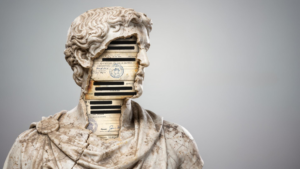
This book challenges you to examine what you think you know from a different perspective by providing information and perspective that might not align with what you’ve been taught.
Let me show you how this pattern of incomplete information works with a simple example most Americans learned in school.
In elementary school in the United States, most children are taught that “Columbus discovered America.” Then in high school they learn that Columbus wasn’t the first one to discover America; the Vikings had discovered it centuries earlier. Then in College, if they study history, they learn that Columbus didn’t even see or set foot on what is today known as the American mainland. The closest he came was during his fourth voyage (did you know he made four voyages to the Americas?) when he was exploring the northern parts of Central America.
They may have learned that Columbus, an Italian, was sponsored by Spain because Spain wanted to find a faster route to Asia, but they probably didn’t learn that Spain didn’t care about discovery. They wanted to increase trade, spread Christianity, and gain territorial advantage over other countries. In fact, when Columbus landed in the Bahamas in 1492, he thought he was all the way in India, and so he called the people there “Indians.” That is why we still use that term today.
But did you learn that in 1500, eight years after “discovering” America, Columbus was arrested for tyranny, brutality, and corruption and extradited back to Spain in chains? Did you learn that he was later released and died just six years later in 1506, stripped of prestige, feeling betrayed and neglected, largely out of both public and royal favor, without title, without the vast riches he believed he had earned, largely forgotten, widely discredited, and a social outcast?
When you know all the facts, it changes your perspective from the energetic, happy, explorer-hero setting out to find new lands, to an almost hypocritical missionary brute who stayed one-step ahead of the law until his actions caught up with him.
Which was he? Maybe a little of both. History is seldom clear cut. But it helps to know the whole truth so you can discuss an event or person logically from a position of knowledge and make informed decisions.